
What is Your Vision in Life


When Steve Jobs, the founder of Apple, passed away not too long ago, there wasn’t anybody, Muslim or non-Muslim, who was left uninformed. However, during around the same time, there was a man who passed away from the Ummah of the Prophet Muhammad ﷺ. A man whom we can arguably give the title of the legend of the 21st century.
He passed away around the same time as Steve Jobs died. Yet when he died, very few people were aware.
I speak today, brothers and sisters, of a man who hasn’t been given his credit and the praise which he deserves. But my hope, however, and condolences, is that he will have it with Allah.
We speak today of Dr Abdur Rahman Al-Sumait — a Kuwaiti qualified doctor in the field of medicine and surgery, who qualified from the University of Baghdad like any other student and graduate. But then he pursued another diploma in the field of tropical diseases here in the University of Liverpool in the UK in the year 1974. And then he went to complete his post-graduate studies in the University of Montreal, Canada, specialising in internal diseases and gastroenterology — the digestive system.
A Vision Is Born
Like every other graduate, Dr Abdur Rahman — like me and you — was working. He saved up. He got married to a lady nicknamed Umm Waqas.
And once this blessed and righteous woman, she approached her husband and she said:
“Ya Abu Waqas, you and I do not want to live average lives. We don’t want to be like the average graduates. We were created for a very big cause. We have to do something else.”
He said to her: “Oh my wife, what do you have in mind?”
She said: “I believe we should be calling to the path of Allah.”
She said to him: “What about you?”
He said: “I too believe we should be calling to the path of Allah.”
She said to him: “Excellent. Then why don’t we go to East Asia and dedicate our lives to that area of the world? I can work as a teacher and call to the path of Allah, and you can work as a doctor and call to the path of Allah.”
Because Allah found truthfulness and genuineness in their hearts, the opportunity arose. Allah says: if He sees in your heart goodness, He will give you goodness.
The wife of the ex-Amir of Kuwait, Amir Jabir, approached Dr Abdur Rahman around the same time and said: “I have a sum of money that I would like to give to you, to travel to Africa. And I want you to personally supervise and manage the construction of a masjid to be built in my name.”
So he took the sum of money and off he went to Africa with the sole intention of building a masjid.
What He Saw in Africa
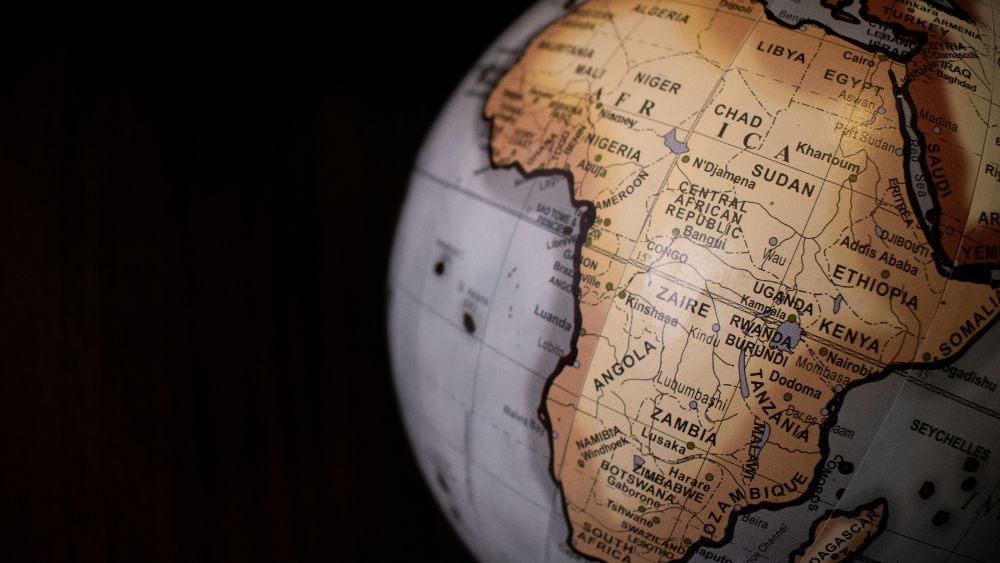
He landed in one of the cities in the African continent and he built the masjid. And he began to walk through the streets of the many villages in the African continent. And he saw something that he could never imagine. He was shocked and bewildered. He was devastated and depressed by what he saw. Everything that he had previously read in the books, he now saw on a firsthand basis.
As for the Muslims, he saw a people who didn’t know how to recite Al-Fatihah. He saw Muslims who didn’t know the Arkan — the five pillars of Islam, the concept of Salah, let alone Zakat — and were totally oblivious to the basics of Islam.
Dr Abdur Rahman said: “I even saw some of the imams of the masjid fornicating in the masjid, not knowing that this was haram.”
And as for the situation of the non-Muslims, then the calamity — the calamity — was far worse. He saw idolatry at its peak. He saw paganism at its climax. He saw people worshipping the stars, worshipping the moon, worshipping the trees, worshipping one another. The concept of God and Allah had totally disappeared from their hearts.
He also saw the effects of the Christian missionaries in Africa. He saw entire villages, my brothers and sisters, that had left the religion of Islam and embraced Christianity for food and drink and shelter. He saw this in Tanzania, and Malawi, Madagascar, South Sudan, Niger.
He came back to Kuwait and he said to Umm Waqas: “Let me tell you what I saw.” And he opened up his heart — and it was like a haemorrhage of pain.
He said to her: “We must do something about this.”
She said to him: “What can we do?”
From that day onwards, my brothers and sisters, Dr Abdur Rahman dedicated his life and his time, his effort, his tears, his wealth for the sake of the da’wah to Allah subhanahu wa ta’ala in the African continent. And off he went, all by himself along with his family, and he began his mission there.
Trials on the Path of Allah
Allow me, my brothers, because of the shortage of time, to summarise some of the experiences of Dr Abdur Rahman Al-Sumait.
He says in an interview that was conducted between him and Dr Haif:
“There were certain villages that we needed to get to, to call to the path of Allah and invite them to Islam. But between us and the village was a huge river. Stagnant water, still water that had turned black because of the excrement and the faeces and filth. A river that was infested with all types of diseases and lizards. And we had no way to get across but to walk straight through it.”
He said: “We entered the river and the water reached up to our throats.”
The interviewer asked him: “How long were you walking till you got to the other side?”
He said: “For four hours.”
And this is a doctor who has a degree in tropical diseases. He knows of the danger associated with doing this.
Dr Abdur Rahman said we would sometimes need to walk for 200 to 300 kilometres on our feet on the unpaved streets of Africa to get to a people to invite them to the path of Islam. He said at times three whole days would pass and there wasn’t anything to drink. Three days.
And he says: “I remember a time when I was kneeling over, looking into a particular pond that was filled with excrement and faeces and urine. And I was moving my hand trying to remove the excrement, trying to find a small amount of clean water, just to quench the dryness of my throat.”
He speaks of very close encounters that he had with deadly cobras — at least three times, in Kenya, in Mozambique, and in Malawi. Each time, Allah Almighty saving him through a miracle. He speaks of two assassination attempts that were made on his life. And twice where he was imprisoned and he came very close to execution. He speaks about the diseases that he acquired in Africa.
He speaks also about a time when he needed to get to a certain village, and so he sat at the back of a lorry. He says: “The lorry was tossing me from side to side within the walls of this hard container on the unpaved roads of Africa, till we got to this village many hours later.”
Why?
He had sold his soul for the sake of Allah. And he couldn’t consider himself cheap in the work for Islam.
That is why Allah Almighty says about this category of people:
“And among men there is one who sells his very soul to seek the pleasure of Allah.” [Surah al-Baqarah, 2:207]
And how beautiful was the description of Abdullah ibn Mas’ud (RA), the companion, as he described Bilal (RA) as he suffered, with boulders being thrown on his chest and levelled on his weak body. He says: “Bilal was a man who considered himself cheap in the path of Allah.”
When the Rain Came Down
Dr Abdur Rahman said: “We once reached a village which was struck by a very severe drought. And the chief of the village refused to let us inside.”
They begged him. He said: “You will not come inside, only if you ask your Lord to bring us down rain.”
He said to him: “Please don’t ask this of me. This is not in my hands, nor is it in your hands.”
He said to him: “Then you leave.”
He said: “Give us a chance.”
He said: “Ask your Lord to bring us down rain.”
He said: “This is not in my hands.”
But he insisted. Dr Abdur Rahman said: “He put us in such an awkward situation. And the grief that filled my heart, only Allah knew of it. I looked at my friends and they looked at me. What do we do? I had no choice.”
He says: “I raised my hands to Allah and I began to beg Him and call Him. And I cried and I cried and I cried, saying: ‘Ya Allah, don’t allow my sins and my shortcomings to prevent Your slaves from believing in You.'”
And he says: “As I wept and looked into the heavens and implored Allah, we began to see the clouds gathering. And they were darkening and darkening. Thunder and storm. And the rain began to haemorrhage from the heavens — Allahu Akbar — in a way which this part of Africa had never experienced.”
The chief of the village entered the religion of Islam. And the entire village entered the religion of Islam as well.
Nurturing the Next Generation
Dr Abdur Rahman also had a granddaughter who was excelling in her studies in Kuwait. So he wanted to reward her. He wanted to give her a prize. It wasn’t a cinema ticket, however. Nor was it a voucher. Nor was it a toy. He bought her a ticket to Africa. He said: “Come and give da’wah with me for a moment. This is your reward.”
A thirteen-year-old girl. So she travelled to Africa and she met her relative, and she stayed there only for a few weeks. And alhamdulillah, 27 people took their shahada through her.
Look at how he was a man who would nurture the next generation of believers as well.
Dr Abdur Rahman says: “I will never forget a time when me and my wife Umm Waqas were sitting in a small rundown wooden house in Madagascar. We sat together in the courtyard in the middle of the night. And I looked into her face and the signs of fatigue and exhaustion were very clear on her.”
He said to her: “You look very tired. Have you given up?”
She said to him: “Abu Waqas, can I tell you what I was thinking just now?”
She said: “I was thinking that if Allah Almighty allows us to enter Paradise, will we be as happy as we are today?”
They say behind every great man is a woman. This couldn’t be any truer.

The Fruits of Thirty Years
Dr Abdur Rahman would spend around 30 years in the African continent, giving everything that Allah had placed under his disposal for the sake of this da’wah.
Some of his achievements, my brothers and sisters, are so bewildering that I tell you — nations that have budgets of billions, they couldn’t achieve what this man achieved by himself, by the permission of Allah.
By the end of those 30 years:
- Dr Abdur Rahman had built over 5,500 mosques
- He had sponsored over 50,000 orphans, many of whom grew up to become doctors and lawyers — Allahu Akbar
- He had distributed no less than 7 million copies of the Quran
- He had established 840 academic institutions, ranging from nurseries all the way up to universities — institutions that were home to no less than half a million African students
- He dug and supervised the digging of no less than 12,000 water wells
- He established 90 hospitals and pharmacies
And as for those who embraced the religion of Islam through Dr Abdur Rahman, only Allah subhanahu wa ta’ala, Al-‘Alim, knows the reality of this number. However, his companions predict and say: no less than 11 million people took their shahada through him.
However, this didn’t come for free. This came at the expense of many tears that he had shed. This came at the expense of countless sleepless nights. This came at the expense of his dreams, his worldly dreams. This came at the expense of his health, where he needed to consume no less than 20 tablets of medicine before he went to sleep every night because of the diseases that his body had now become home to.
The Final Journey
During the closing months of the life of Dr Abdur Rahman, he found himself now travelling from country to country in search of medical assistance for his deteriorating health. Himself. Now it was time to pay attention to himself. But he had forgotten. And now death was imminent.
He travelled from Africa back to Kuwait, and from Kuwait he went to Germany. But his ever-deteriorating medical condition was only worsening.
And in August 2013, it was finally announced that Dr Abdur Rahman Al-Sumait had passed away.
We ask Allah to have mercy upon this Sheikh, upon this father of ours. We ask Allah to gather him with the prophets and messengers and the shuhadaa and the saliheen.
What Is Your Vision in Life?
Brothers and sisters in Islam, imagine after spending thousands upon thousands of pounds investing in a certain university degree, you find after you graduate that there is in fact no demand for your profession. Imagine how you will feel.
If you had spent hours upon hours of torturous revision for a certain final year exam, however when you enter the examination theatre you discover you have been revising for the wrong exam — imagine that.
Imagine after spending years climbing a certain ladder, you discover in the end that this ladder was leaning on the wrong wall. How will you feel?
Now if this individual — in all three of these case studies — had constantly asked himself the question:
- What is my vision?
- What is my objective?
- What am I doing?
- What is my purpose behind my endeavour?
Such chances of such catastrophic hiccups in the end could have been removed and lessened.
Therefore the problem goes back to two words: vision setting.
What is your vision in life?
When you come now to set for yourself a vision in your life as a whole, as a believer, how can you measure that your vision is a correct one? How can you protect yourself from such a regretful ending — where on the Day of Judgement you wish that you had pursued a different vision altogether? How can we protect ourselves from such a catastrophic hiccup and a regretful ending? How does one set and measure a correct vision?
Is it, for example, the amount of money a person seeks to accumulate? Is it, for example, the status and praise that a person seeks to attain? What is an accurate Islamic vision?
See, the problem, brothers and sisters in Islam, we don’t ask ourselves this question frequently. Because the hustle and bustle and the demands of everyday life causes us to forget this. And we will only realise the importance of having set an accurate and measurable and clear vision in the life of this world — we will realise that when reality will be realised in the darkest of ways.
And once what once seemed to be the ultimate achievement in life will, on that day, seem to be a regretfully wasted opportunity. We will see 20/20 vision. Reality will be seen there. The real awakening is yet to be experienced.
Allah says:
“If only you see the criminals, how they will look on the Day of Judgement, when they stand before Allah lowering their heads in humility. And they will say — listen to the words they will say — ‘Oh Our Lord, we now see and we now hear. So bring us back to dunya. We will do good deeds.'” [Surah al-An’am, 6:27]
They will say: “We now see, and oh Allah, now we hear. So bring us back.”
And Allah Almighty says to a certain criminal on the Day of Judgement:
You used to be oblivious. You used to be in sleep because of all of this. Today, however, I have removed from you the curtains. I have removed from you the veils. And now your vision is piercing.
Allah says your vision is hadid — which literally means iron. Your vision is piercing. It is like iron. You now see everything.
So I am saying, my brothers and sisters, we don’t set for ourselves visions in the life of this world because we can’t see the importance of doing so now. On that day we will see the importance of having had a project in our life for the sake of Allah.
You can also use the Sadiq app to set your mission and goals, stay consistent with them, and track your progress.
The Islamic Definition of Success
So we ask the question once again: what is a good vision? Or we can say: what is the definition of success?
And the answer to this, my brothers and sisters — if I have successfully sold to you the idea of setting a vision tonight, with your family and with your relatives and with your children — let me give you now the vision as was identified by Allah.
Allah says in Chapter 3 of the Quran, verse 185:
“Every soul has to taste death. It is on the Day of Judgement that you shall be paid your rewards in full.“
Here comes the vision:
“So, whoever has been kept away from the Fire and admitted to Paradise has really succeeded. The worldly life is nothing but an illusionary enjoyment.” [Surah Al-Imran, 3:185]
This is success.
Therefore we see, my brothers and sisters, that success isn’t about graduating from university. Success isn’t about becoming a business owner, a CEO, a parliamentarian or an MP. Success is certainly not just about having kids, being married, and receiving Nobel prizes. Every success in the life of this dunya, if it does not lead to success in the Hereafter, it is worthless. It has absolutely no weight.
This is the vision that Allah has set for us.
And this is the vision that Dr Abdur Rahman lived and died for.
And because he had a project in his life that was clear — unmistakable — he achieved what he achieved, by the permission of Allah.
And I tell you this, my brothers and sisters: many a time the difference between two Muslims — an average Muslim and a great Muslim — is not always Islamic knowledge. It’s not always about the articulacy of speech. It’s not always even about sincerity and Iman. They could be equal, both of them, in these aspects. Sometimes the difference between a very influential person who does so well in the da’wah, and a person who doesn’t get the maximum return on the Day of Judgement, sometimes the difference between them is one thing: the vision. Individual A had a clear vision ahead of him. Individual B was just taking every day as it came.
When we talk about health, the majority of us have better health than Dr Abdur Rahman. He had diabetes, by the way. He had high blood pressure. He experienced two bouts of malaria. And he experienced three blood clots — one in his heart, two in his brain. And none of this formed as an obstacle or a hindrance from success.
If we talk about wealth, a lot of us have more wealth than him. If we talk about youth, the majority here are younger than Dr Abdur Rahman.
What is the difference?
He said: “When your aspirations are very high, your body will tire in its pursuit.”
A Plea Before I Sit Down
Brothers and sisters, I beg you — and this is a plea that I make to myself and yourself before I sit down and conclude:
Do not be an average Muslim. Don’t be a sideliner, a normal player. Bring now for yourself a project. What are your talents? What are your strengths? Identify them with honesty. And I know it is difficult, because you have to be honest with yourself. And you have to consult others. And you have to discipline yourself to stay working for that vision. I know it is hard. But wallahi, this will bring the optimum return for us on the Day of Judgement.
Have a project for yourself, regardless of your age and regardless of your gender. What is your project in life? Who do you want to be in another 10 years’ time?
If you want to have an indication, brothers and sisters, of what you will look like in 10 years, ask yourself: who was I 10 years ago? If the person you were 10 years ago is the same person today, this is a very accurate indication that in 10 years’ time you will be the exact same person.
Set that vision for yourself. And consult the people of knowledge and wisdom and ask them: is this a correct vision? Trim it down for me. Give me a timeline. Give me success indicators.
And watch how Allah Almighty will open up the paths for you — the same way He opened it up for Dr Abdur Rahman Al-Sumait.
Courtesy: This article is based on a lecture by Sheikh Ali Hammuda published by MercifulServant.


